3.4 Construction Management
In construction management, the principal engages a construction manager (contractor or consultant) to manage construction works on its behalf. The principal manages the scoping and engages the designer directly. The principal also engages the trade contractors directly, although these contracts are entered into by the construction manager as the principal's agent. The construction manager performs a purely management and co-ordination role (without delivery risk) and is generally paid a fee based on a percentage of the value of the works.
The following figure illustrates the contractual relationships involved in a typical construction management arrangement -
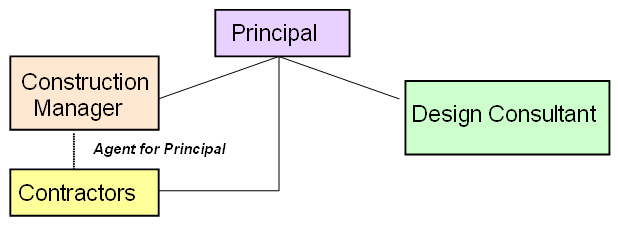
Figure 7: Construction Management Structure
The construction manager typically:
• provides advice, coordination, planning, cost management, supervision;
• is paid a fee based on time or a percentage of the value of the works;
• engages trade contractors as agent for the client;
• is responsible for preliminaries for those trade contractors (e.g. crane hire, site sheds etc); and
• does not take any cost risk or design risk although the construction manager may be paid to assist the client with cost control and design advice.
Construction management sometimes appears similar to the managing contractor model. Some key differences between the models are shown in the following table -
Element | Construction Management | Managing Contractor |
Cost risk | The construction manager does not typically assume cost risk | • assumes cost risk • typically guarantees a maximum price for the works and • receives incentive payments for achieving cost targets |
Cost certainty | The principal has little cost certainty until all of the trade contracts are in place and will need to closely manage those contracts to control costs | The principal usually has cost certainty through the guaranteed maximum price |
Remuneration | The construction manager is usually paid a fee based on time or a percentage of the value of the works | A fixed lump sum management fee is usually negotiated. The managing contractor may also receive incentive payments for achieving cost and schedule targets. |
Design risk | The construction manager may provide some design advice but does not accept overall design risk | The managing contractor accepts design risk |
The construction management model can be suitable for major construction in particular situations e.g.:
• If a contractor collapsed mid-project, it may be more efficient to complete the project through construction management than to fully document and tender the balance of the works as a single package;
• where government needs to retain direct control over works e.g. in an operating hospital or rail corridor; and/or
• complex projects where it is not possible for design of some elements to be started before work is undertaken on others.
The following table lists features of the construction management model -
Advantages | Disadvantages (and issues that may need managing) |
• Construction manager administers contractors on principal's behalf • The principal selects its own architect/design consultants • The principal can shift management risk to the construction manager • The principal can retain a high degree of control over works while engaging an expert professional to administer and coordinate the project • Parts of a project can proceed while other aspects are still being documented | • No single line of responsibility • The principal must claim directly against the contractors & consultants if things go wrong • Can be administratively complicated • Extra cost of construction manager • Limited ability of principal to control costs • No cost certainty • Lack of focus on lifecycle costs and considerations |